Cold-process and hot-process pastry creams for professionals
The Excellence range offers two pastry creams: a fast, consistent cold version, and a hot version for applications that need bake stability. Both are tested through the freeze-thaw cycle.
Flavours and pack sizes
Pack : 5 kg bag
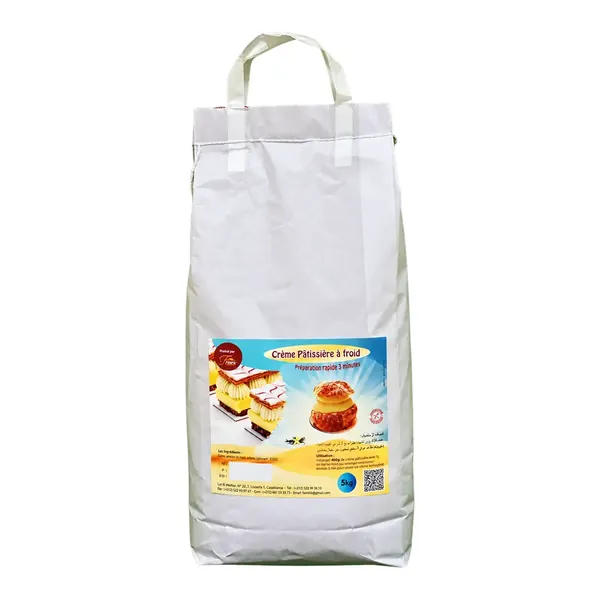
Cold-process pastry cream
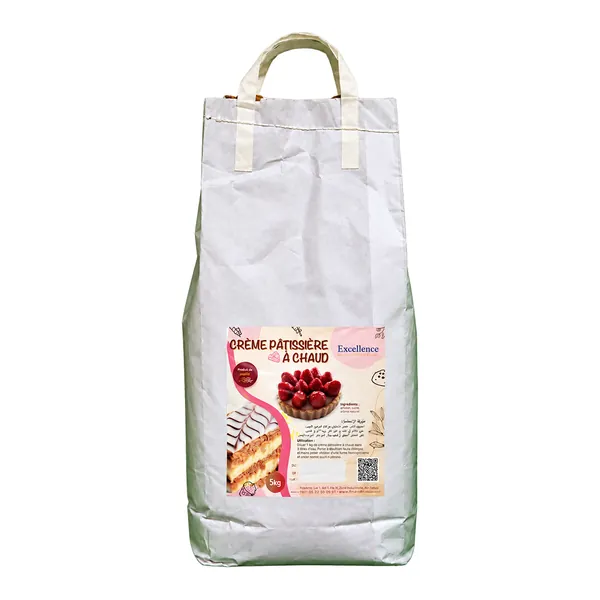
Hot-process pastry cream
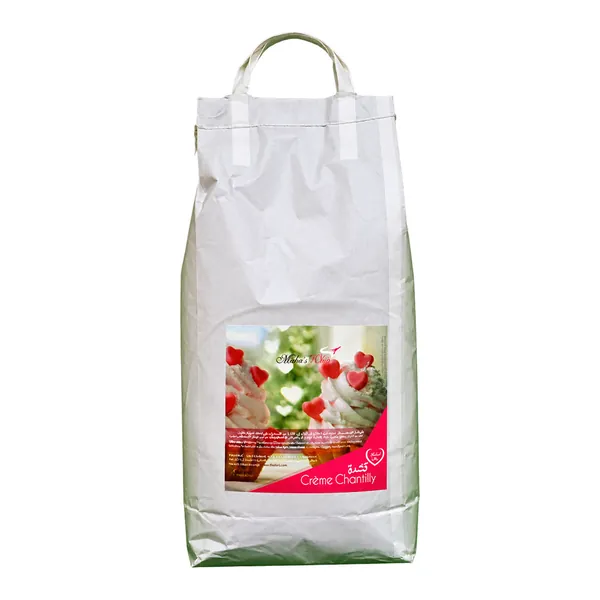
Whipped cream (chantilly)
Delivery : Across Morocco, and for export on request: Libya · Mauritania · Senegal · Nigeria · all countries
Cold-process pastry cream
Constant overrun and a fast set, with no risk of overcooking. Suited to workshops that want to save time and gain consistency.
Hot-process pastry cream
The hot version remains preferred for certain applications of taste and bake stability.
Freeze stability
Both versions are tested through the freeze-thaw cycle, useful for pieces made in advance or deep-frozen.
Shelf life and control
12-month shelf life. Every batch is microbiologically self-checked in an accredited external laboratory. Analysis reports on request.
Cold or hot process: which to choose?
Cold-process cream (powder mixed with cold water or milk, no cooking) brings a consistency that cooking does not always guarantee: no overcooking or lumps, no cooling stage to manage, less labour. It suits viennoiserie filling, verrines and high volumes. Hot-process cream remains preferred for a specific cooked taste or bake stability (flans, baked tarts).
Order and test
Cold and hot pastry creams: 5 kg bags. The deciding criterion is often the storage cycle: if the finished product is frozen then put back on display, validate the cream on that exact cycle before rolling out. Free sample with diagnosis, supplier based in Casablanca.
Other pastry products : Ready-to-use pastry fillings · Mirror glazes · Cake and brownie mixes · Double-action baking powder
Read also
Test it with your recipe
Tell us what you need: we offer a free sample with diagnosis, no commitment.
Frequently asked questions
The cold version gives constant overrun and a fast set, with no risk of overcooking. The hot version remains preferred for certain applications of taste and bake stability.